Skip to main content

Lorem ipsum dolor sit amet, consectetur adipiscing elit. Suspendisse varius enim in eros elementum tristique. Duis cursus, mi quis viverra ornare, eros dolor interdum nulla, ut commodo diam libero vitae erat. Aenean faucibus nibh et justo cursus id rutrum lorem imperdiet. Nunc ut sem vitae risus tristique posuere.


“I don't want to be labelled. I don't want to have to constantly be going over things. But similarly, I don't want special treatment. I just want to be able to do my job effectively.” This insight from a disabled employee led this global healthcare organisation to rethink how it asks people managers to be there for disabled and neurodiverse employees. We worked with them, and the Business Disability Forum, to come up with an intervention that was all about helping people do their best work without unnecessary barriers or repeated self-advocacy.

“I don't want to be labelled. I don't want to have to constantly be going over things. But similarly, I don't want special treatment. I just want to be able to do my job effectively.” This insight from a disabled employee led this global healthcare organisation to rethink how it asks people managers to be there for disabled and neurodiverse employees. We worked with them, and the Business Disability Forum, to come up with an intervention that was all about helping people do their best work without unnecessary barriers or repeated self-advocacy.
The importance
The insight
The intervention
The Impact

Global, UK HQ

Healthcare

87,000 employees
This client came to us because they wanted to help people managers better support colleagues with disabilities and neurodiversity. Their ask was relatively straightforward: make it easier for managers to do the right thing by these colleagues so that they can thrive at work.
The focus needed to be on positive behaviours rather than processes. They also wanted to connect people more effectively to relevant resources.

We were very fortunate as our client conducted extensive focus groups with the help of the Business Disability Forum, gathering perspectives from:
One of the most powerful insights came from an employee:
“I'm tired of having to explain myself constantly. A lot of the time I am able to do things. I don't want to be labelled. I don't want to have to constantly be going over things. But similarly, I don't want special treatment. I just want to be able to do my job effectively.”
Across all groups, the shared aspiration was clear: create a workplace where people can perform at their best without unnecessary barriers or repeated self-advocacy.
Another key theme was proactivity: managers who have spent time getting to know their team members are better placed to anticipate needs and offer adjustments early.
A scenario-led design
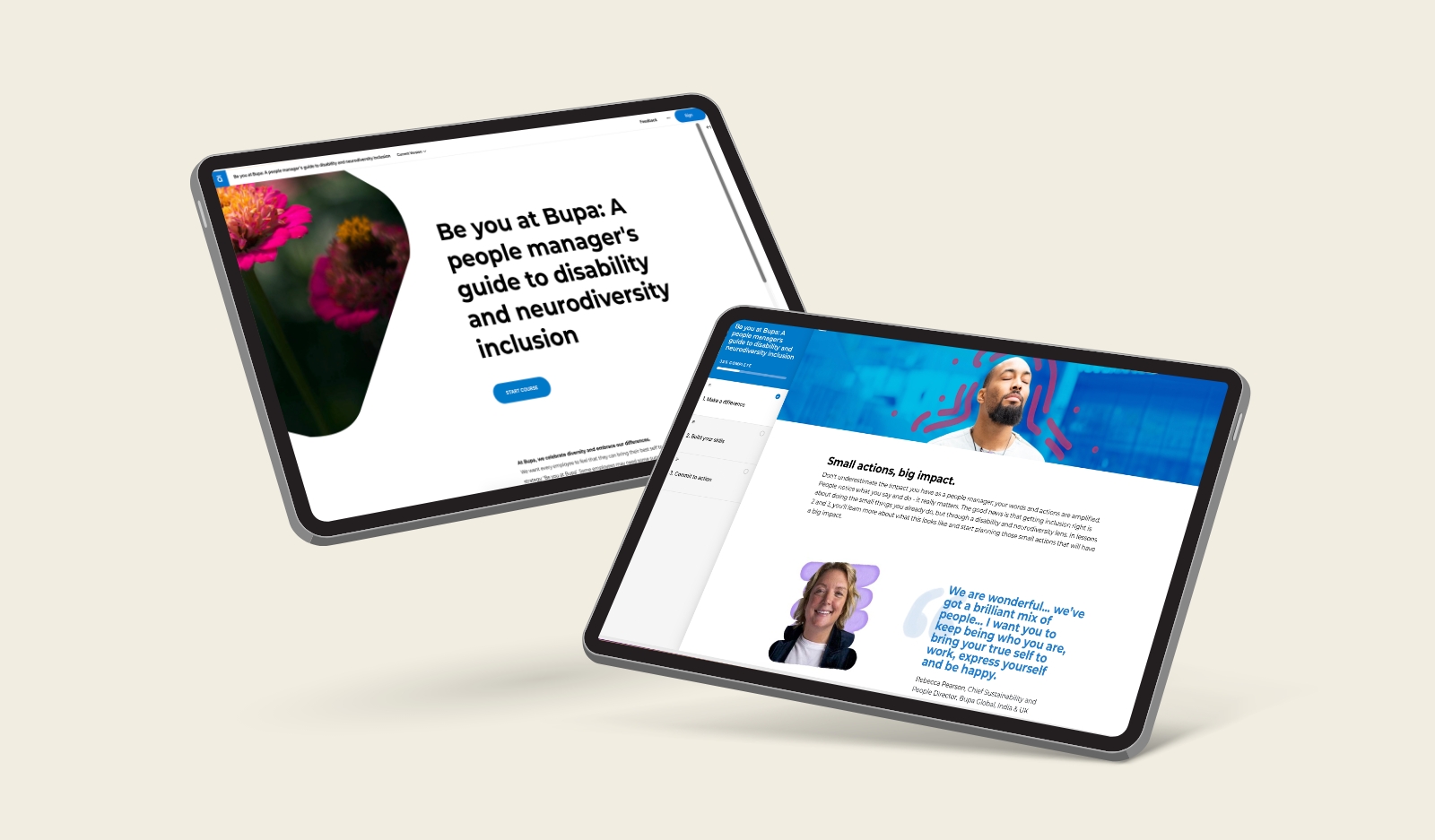
We built a digital learning module informed by real stories.
Three short, positive scenarios illustrated how perceptive, proactive managers can enable colleagues to thrive. These were fictional but grounded in real Bupa employee quotes about how their managers had supported them.
One scenario focused on an employee with suspected but undiagnosed ADHD, overwhelmed after self-research. This storyline emphasised that adjustments are not just limited to those with formal diagnoses: “You can make adjustments for anybody in your team, not just somebody who has a medical certificate.”
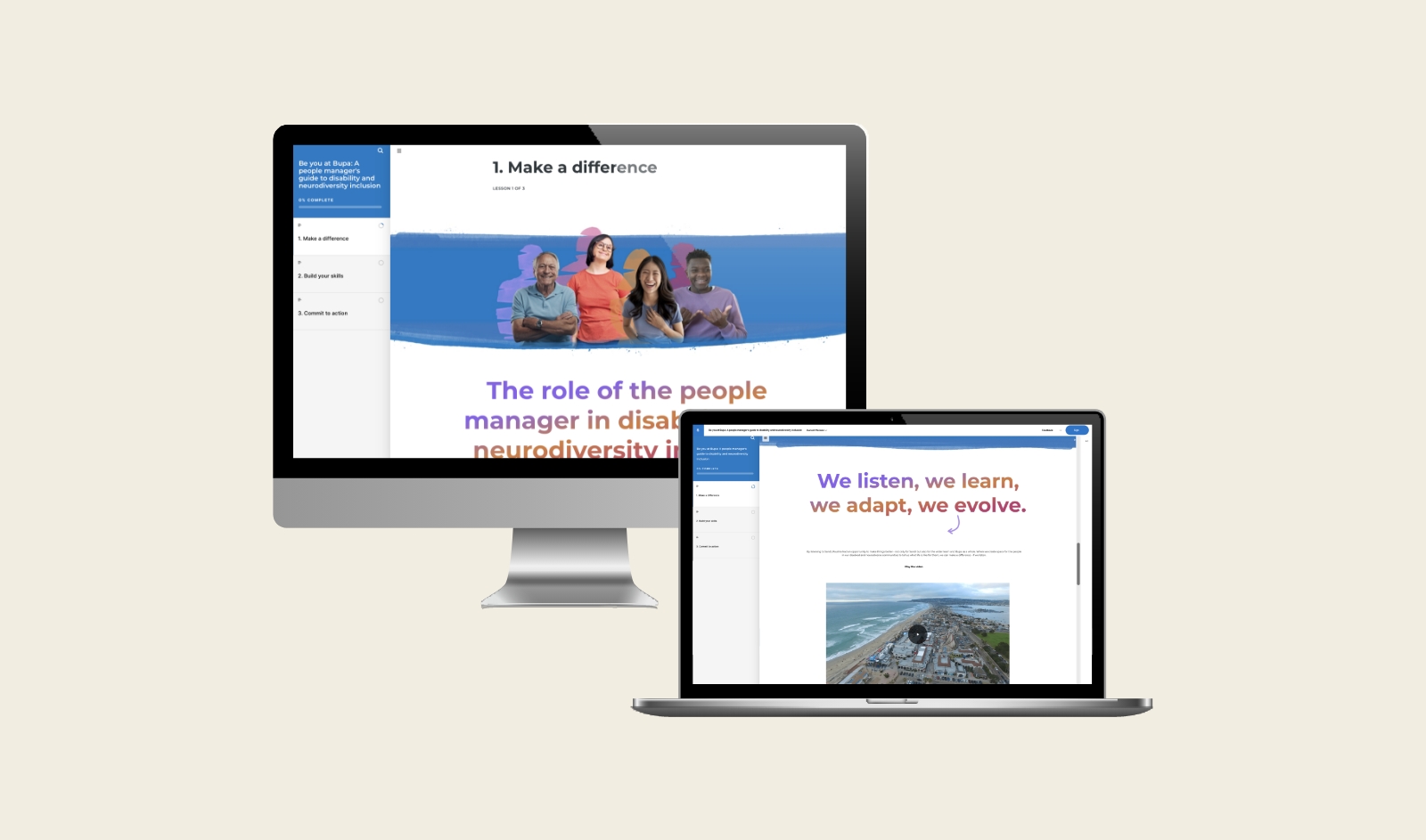
An accessibility‑first design
A neurodiverse member of the client team influenced key design decisions. We implemented:
A resources hub
We also made use of our client’s instance of our experience platform, XP, in order to provide managers with quick, user-friendly access to:
This created a seamless ecosystem for ongoing support.

This programme was recently launched to much praise for the sensitivity of the scenarios and the easy to use accessibility features. It is already influencing internal conversation within the organisation about inclusive design as well.
Manager feedback so far has been very positive…
“I found it very useful, particularly the emphasis on having open and honest conversations and recognising that people with the same diagnosis may have very different experiences and support needs. I will certainly consider how I approach wider conversations.”
“I think including this sort of approach as a usual part of 121s or team engagements will go a long way to encouraging more honest and open conversations.”
“I loved how it made me proud to work for Bupa. Thank you for putting it together.”
We'd love to explore the potential for behavioural science to inspire positive change within your organisation.


